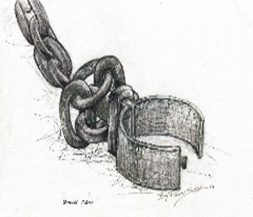

“I would rather die upon yonder gallows than live in slavery!”
Samuel “Daddy” Sharpe, Jamaica 1832
Resistance by Africans to slavery, sometimes in conjunction with indentured white servants, Native Americans and Native Caribbean Islanders, was incessant and continued until they achieved their freedom through a series of organised wars.
Rebellion and resistance against repression by European, US and South American states took many forms; from silent refusal, non-co-operation, maintaining aspects of African culture, theft, strikes, sabotage, arson, poisoning, running away, inducing abortions, and taking up arms. Most of their acts of bravery go unrecorded but these continual, brave and stubborn actions, by the seemingly powerless, should be born in mind as you read this post.
Importantly, through the sea-trading of colonial goods, news of rebellions spread throughout the Caribbean colonies and the American mainland and thus inspired other slaves to revolt. News of uprisings was also brought back to Europe by the sailors on the transatlantic sailing ships and this also encouraged the downtrodden and disenfranchised of Britain and elsewhere, to revolt. It should be remembered that the slave and plantation owners, in say, Jamaica were directly related to the families of wealthy, tyrannical bankers, merchants, landowners, industrialists and aristocrats back in Europe. Hence, the many of Europe found common cause with the struggles of the colonially enslaved.
Conversely, as you will read, slaves themselves were enormously encouraged by news of the French Revolution of 1789; with its radical demands of Liberty, Fraternity and Equality.
The following list of uprisings, rebellions, wars and revolutions is by no means complete. But we do hope it will stimulate discussion, understanding and a desire for further research.
Stoke Ferry & District History Group, September 2024
~~~~~~~~~~~~******~~~~~~~~~~~~
- 1522-23 – Haiti/Dominican Republic. These years saw major slave rebellions as the slaves on the Spanish island of Hispaniola (now Haiti and the Dominican Republic) tried to escape enslavement. These revolts continued, for almost 300 years, until, in 1803, the island’s slaves finally freed themselves and defeated colonial rule.

- 1527 – Puerto Rico. Dozens of slaves fought against the colonists. Several slaves escaped and retreated to the mountains, where they lived as Maroons with surviving native islanders; the Taínos. By 1873 slaves on the island of Puerto Rico carried out more than twenty revolts.”
- 1552 – Haiti/Dominican Republic. A further slave rebellion.
- 1635 – (Old) Providence Island, Bahamas. Escaped slaves set up independent free settlements.
- 1639 – St Kitts. Over sixty male Africans from the Capisterre region left their plantations with many enslaved women and children. On the slopes of Mount Misery, they built a formidable camp from which they carried out raids on the island’s plantations. Their refuge was finally stormed by some 500 soldiers and the uprising was crushed. Most of the rebels were killed in skirmishes, some were executed by burning, while the rest were captured, quartered, and their limbs exposed on stakes to serve as a warning to those who might be tempted to rebel.
- 1644 – Virginia. Slaves belonging to a Mrs. Wormley engaged in “riotous & rebellious conduct“.
- 1649 – Barbados. Conspiracy to rebel betrayed and frustrated.
- 1655 – Jamaica. Admiral Sir William Penn was Oliver Cromwell’s Sea General who, along with General Venables, was responsible for the 1655 British capture of Jamaica from Spanish colonialists. When the small Spanish force was overcome by the British many Spanish slaves used the opportunity to escape to the central highlands of the island – they formed a free Maroon community whose members were never again enslaved.
- Jamaica then became the base for British slavery and piracy and for British colonial expansion in the West Atlantic; Oliver Cromwell’s Western Design.
- 1656 – Guadeloupe. Revolt lead by Angolans.
- 1656 – Jamaica. English military commanders whose forces invaded this Spanish colony reported:
“The Negroes … live by themselves in several parties, and … do very often, as our men go into the woods … destroy and kill them with their launces [sic] … our English … seldom killing any of them.”
- 1663, September 13, – Virginia. First serious slave conspiracy in Colonial North America. In Gloucester County a servant betrayed the plot of black slaves & white servants. The slaves and indentured servants planned “to destroy their masters and afterwards to set up for themselves.” The uprising was led by mutinous and rebellious followers of Oliver Cromwell, “soldiers that were sent thither as servants” after King Charles II was restored to the throne in 1660. The informant, an indentured servant named Berkenhead, received a reward of five thousand pounds of tobacco plus his freedom. Several bloody heads dangled from local chimney tops as a warning to others.
- 1670 – Jamaica. Reward offered for Juan de Serras, leader of one of the free settlements on the island.
- 1673 – Jamaica. Rebellion in Parish of St. Ann. About 200 freed slaves escaped to the inland mountains and were never dislodged.

- 1675 – Jamaica. Martial Law declared by the British; 35 slaves executed for conspiracy in the Parish of St Mary. Slave leaders identified as Peter, Scanenburg and Doctor.
- 1675 – Barbados. Conspiracy uncovered across many plantations. 110 slaves were charged with conspiracy. Fifty-two were executed – six of whom are burned alive, while eleven were beheaded. Five of the conspirators took their own lives before their “trial”.
- 1678 – Jamaica. Martial Law declared in connection with uprisings at Caymanas in St. Catherine Parish.
- 1679-1704 – Haiti/Dominican Republic. Four armed conspiracies organised by slaves. All are “aimed at the massacre and annihilation of their white masters.” The rebellions, quickly suppressed, demonstrate continual unrest and resistance.
- 1683 – Jamaica. Conspiracy involving 180 slaves is betrayed in Vere Parish (now part of Clarendon Parish).
- 1685 – Jamaica. Rebellion on four plantations at Guanaboa Vale. seven rebels were killed and 50 captured. However, 63 managed to escape.
- 1686 – Jamaica. A guerrilla band numbering 40-100 slaves whose ship had been wrecked off the island are reported operating in St. Mary Parish, St. George (now in St Mary & Portland Parishes) and St. Thomas ye Vale (now part of Saint Catherine Parish).
- 1686 – Barbados. Conspiracy occurred between black slaves and Irish indentured servants. 18 Irish servants were arrested but later freed, 20 slaves were executed.
- 1685-88 – Jamaica. 52 slaves were executed for “rebellious behaviour”.
- 1687-88 – Virginia.A widespread conspiracy in the peninsular district of Northern Neck was crushed and its leaders executed. When authorities learned that the plotting was done under the cover of large gatherings for slave funerals, they prohibited slave funerals. The next year, Northern Neck was the site of another attempted uprising, this one led by “Sam, a Negro Servt to Richard Metcalfe” who had “several times endeavoured to promote a Negro Insurrection in this Colony.” “To deter him & others from the like evil practice for time to come,” the court ordered the sheriff of James City County to whip him severely and return him to the Westmoreland County Sheriff to be whipped again. Sam would forever wear “a strong Iron collar affixed about his neck with four sprigs.” Should he leave his master’s plantation or remove the collar, he would be hanged.
- 1690 – Jamaica. 500 slaves of Akan origin from the Gold Coast (present day Ghana) rebelled at Suttons Plantation in the heart of the island in Clarendon Parish. They killed the white overseer, seized a large store of firearms and proceeded to the next plantation and killed a second overseer. Some 150-armed rebels then established a strong settlement in the central mountains; a new town, free from colonial control, in the forested and naturally defensive mountains of the island’s interior, in what is known as Cockpit Country. Naquan was allegedly the first leader of this group of West Jamaican Maroons.
- 1692 – Barbados. This rebellion was to have been extensive with its leaders planning to take over the entire island of Barbados. When the conspiracy to massacre was discovered, over 200 slaves were arrested. Three leaders of the leaders were Hammon, Ben and Sambo. Ben and Sambo are tortured (gibbeted) and Sambo died before being tried. Hammon and Ben confessed to their part in the conspiracy when promised a reprieve but were then executed along with 92 others.
- 1704 – Jamaica. Insurrection involving 30 slaves, 12 of whom died. The island Governor reported that “the ringleaders were taken and executed, and the rest sent off the island”.
- 1708 – Barbados. Slaves executed attempting to burn down the island’s capitol of Bridgetown and take over the fort.
- 1708 – Long Island (New York). 7 whites were killed, and 4 slaves were executed.
- 1709 – Virginia. A plot involving enslaved Native Americans as well as African slaves spread through at least three counties—James City, Surry, and Isle of Wight. Of the four main agitators, Scipio, Salvadore, Tom Shaw, and Peter, all but Peter were quickly jailed, and their fate is not known. Peter escaped and remained at large for at least a year and a reward of £10 was offered for his capture alive or £5 if dead.
- 1710, Easter – Virginia. Peter (see above) may have been behind a further attempted revolt. Two of the plot’s leaders were tried by the General Court, convicted, and executed. Governor Edmund Jenings in his report to the London Lords of Trade, wrote, “I hope their fate will strike such terror in the other negroes as will keep them from forming such designs for the future, without being obliged to make an example of any more of them.”
- 1712, April 7 – New York. Slaves planned an uprising with local Native Americans. Armed with guns, swords, knives, and axes, 23 men gathered in an orchard at the northern tip of the city before setting fire to a slave owner’s home. A group of white men arrived to put out the fire and were ambushed—nine of them were killed. Soldiers were dispatched, and the rebels fled to the forest, where they were eventually captured, though six committed suicide. After trials, 27 slaves were convicted, with 21 of them killed in public executions.
- 1712 – A further significant revolt occurred in New York involving enslaved warriors from Africa’s Gold Coast.
- 1718 – Jamaica. Reports that rebels were freeing slaves from plantations.
- 1719 – St. Vincent. The ‘Black Caribs’ (the descendants of slaves and Carib Amerindians) ambush and defeat an armed French force of 400.
- 1722 – Virginia. When Hugh Drysdale arrived in Williamsburg as Virginia’s governor, he found the jail full of mutinous slaves awaiting trial. Three of the leaders were convicted of “Conspiring among themselves and with the said other Slaves to kill murder & destroy very many” of His Majesty’s subjects and were sentenced to be sold out of the colony. Drysdale stated their design, “…. was to cutt off their masters, and possess themselves of the country; …”
- 1723 – St. Vincent. The ‘Black Caribs’ turn back a British expedition which tries to incur onto the island.
- 1728-29 – Jamaica. Troops were sent from Britain to assist the local militia. This causes all escaped slaves to come together in two main groupings. This is the start of the Maroon Wars.
- 1730-40 –1st Maroon War, Jamaica. The Windward Maroons were led by Nanny and the Leeward Maroons were led by Cudjoe.
- Nanny ruled as an African Queen and an Obeah Woman. She was of the Asante people from present-day Ghana and ensured the continuation of African culture and traditions amongst her people. When there was fighting the women and children under her protection would hide in ‘Girls’ Town’ or ‘Women’s Town’ in the John Crow Mountains. Nanny made a vow on Pumpkin Hill in 1737 to fight the British to death. When she did eventually sign a treaty with the British, she did so wearing the teeth of her dead British enemies. She established Nanny Town which is still in existence. In 1977 she was awarded the posthumous honour of ‘National Heroine’.
- Cudjoe or Captain Cudjoe was the leader of a community of runaway slaves in what is known as Cudjoe’s Town (Trelawny Town) in the south of St James’ Parish. He was reportedly the son of Naquan the first leader of the Maroons (see 1690, Suttons Plantation rebellion). The planter Thomas Thistlewood met Cudjoe in 1750, and wrote, “…he had on a feather’d hat, Sword at his Side, gun upon his Shoulder…Bare foot and Bare legg’d, somewhat a Majestic look”.
- 1730-31 – Virginia. Slave conspiracy discovered in Norfolk and Princess Anne counties:
“Negros…. had the boldness to Assemble on a Sunday while the People were at Church, and to Chuse from amongst themselves Officers to Command them in their intended Insurrection, which was to have been put in Execution very soon after…”.
Four rebel leaders were executed, and the rest harshly punished. Afterwards, the colonial militia had to patrol two or three times a week to prevent night meetings, and every man brought his guns to church on Sundays so that they would not “be Seized by the Slaves in their Absence, if the same mutinous Spirit should be Revived amongst them.”

- 1733 – Berbice, (Guyana). Rebellions on plantations on the Canje River. Rebels escaped to neighbouring Suriname and joined existing rebel forces. Rebellions were also suppressed on the Peterhoff Plantation and Plantation Switzerland that same year.
- 1733 – Danish West Indies. Rebellion on St. John island. 40 white people, planters and their families were killed by people of Akwamu (Ghana), including their female leader Breffu. The uprising was suppressed the following year when Breffu and 23 other rebels committed suicide rather than be captured. (see, 1848)
- 1736 – Antigua. Slave revolt led to 88 executions by burning
- 1739 – Jamaica. Cadjoe, the leader of the Maroons, and the British signed a peace treaty.
- 1739 – September 9 – Stono, South Carolina. Three uprisings known as the Stono Rebellion. The insurrection started with 20 slaves marching southwest toward St. Augustine with ‘colours flying and two drums beating’. 25 whites were killed before the insurrection was put down. In total 65 black and white people died. It was the most serious slave revolt on the American mainland.
- 1741, March-April – New York. A series of suspicious fires and reports of a slave conspiracy led to general hysteria in the city. Thirty-one slaves and five whites were executed.
- 1749 – Berbice (Guyana). On Plantation Peterhoff most of the slaves tried to take over the plantation but were prevented due to the intervention of other slaves fighting on their owner’s behalf.
- 1751-57 – Haiti/Dominican Republic. Over 3,000 Maroons were led by François MacKendal.

Violent conflicts between white colonists and black slaves were common in Haiti. Bands of runaway slaves, Maroons, had established themselves in the colony’s mountains and forests, from which they harried plantations and their white owners to secure provisions and weapons to defend themselves and kill white colonists. As their numbers grew, these bands, sometimes consisting of thousands of people, began to carry out hit-and-run attacks throughout the colony. The most famous maroon leader was François MacKendal, whose six-year rebellion (1751-57) left an estimated 6,000 dead. Reportedly a ‘Boko’, or voodoo sorcerer, MacKendal drew on African traditions and religions to motivate his followers. MacKendal’s plan included the poisoning of every watering hole in the capital, Port-au-Prince, killing all the whites and then take over the island. The French burned him at the stake at Cap Français in 1758.
- 1751 – South Carolina. Because of the great number of poisonings of white slave owners, the legislature enacted a law making the death penalty mandatory. The number of arson attacks being carried out lead to a proposal to prevent the construction of wooden buildings in the colony.
- 1752 – Berbice (Guyana). On Plantation Switzerland slaves rebelled but slaves from Plantation de Poerboom along with Native Americans were used to suppress them.
- 1760 – Jamaica. Major and meticulously planned rebellions occurred, and many conspiracies took place. The first of these rebellions is known as, ‘Tacky’s Revolt’, and took place in the parish of St. Mary. It required two army regiments, the local militia and the use of marines from a British warship allied with Maroon mercenaries to quell their rebellion. It was immediately followed by a smaller rebellion at Manchioneal in St. Thomas. Then, on June 2 an extremely large rebellion took place on plantations in Westmoreland. It is thought to have involved some 600 slaves who came up against three army companies, the militia from the three western parishes and 100 marines. Yet, by November 7 the Lieutenant Governor thought that the rebellion had still not been completely put down. The Lieutenant Governor also reported the discovery of four other conspiracies in the parishes of Clarendon, St. John, St. Dorothy and St. Thomas in the east of the island. The leaders of these rebellions were treated thus: burned alive, hung in irons and starved, 400 were executed and 600 were transported to the Bay of Honduras (Belize) in Central America. (see Belize, 1765)
- 1761 – Suriname. Dutch were forced to conclude a treaty with armed ‘Bush Negroes’, i.e. Maroons, who also had the Flemish name, Djukas.
- 1762 – Berbice (Guyana). 36 slaves rebelled and escaped collecting further slave recruits along the way. They defeated numerous attempts of capture before being finally defeated.
- 1763 – Corentyne (Guyana). Slaves on Plantation Magdelenberg rose up and obtained arms. They gathered further recruits from other plantations and joined the Maroons (Djukas) in Suriname.
- 1763 – Berbice (Guyana). Under the leadership of Cuffee, rebels gained control of the southern Berbice while the north was retained by the slave-owning whites. However, due to splits in the rebel leadership and the arrival of Dutch reinforcements the rebels were eventually defeated.
- 1763 onwards – Florida. Continual armed resistance by runaway slaves who combined with Seminole Native Americans, to fight colonial rule by, in turn, the Spanish, British, French and, eventually, white ‘Americans’.
- 1765 – Bay of Honduras (Belize). Several slaves, including some of those deported from Jamaica after the 1760 rebellion, rose up and escaped from their owners.
- 1765 – Jamaica. An ill-timed uprising in St. Mary lead to defeat. 13 slaves were executed while another 33 were transported to be sold.
- 1766 – Jamaica. Between 33-45 slaves rebelled in Westmoreland – those not killed during the actual rebellion were executed after capture.
- 1768 – Montserrat. Irish Roman Catholic colonists came to Montserrat in the 1630s. These Irish planters brought African slaves to work their sugar cane fields. Soon the slaves outnumbered them three-to-one and began to rebel.
The slaves planned an island-wide attack on St. Patrick’s Day, when they knew the planters would be celebrating. Servants were instructed to grab all the weapons they could find inside the Government House while the field slaves stormed the building with rocks, farm tools, clubs and homemade swords. But someone leaked the plan. Local authorities punished the slaves severely, hanging the leaders (see below).

In 2018, the people of Montserrat celebrated the 250th anniversary of the St. Patrick’s Day slave uprising.
- 1769 – Jamaica. A conspiracy to revolt was betrayed. Many slaves were put to a ‘painful’ death.
- 1772-83 – St. Vincent. The ‘Black Caribs’ (with support from the French) started warring with the British. In 1783, an armistice between the British and the ‘Black Caribs’ was re-established.
- 1773, January 6 – Massachusetts. Slaves petitioned the legislature for their freedom. There was a total of eight such petitions during American Revolutionary War of 1765-83.
- 1783 – The American Revolution ended. Britain lost her 14 Mainland colonies. About 5,000 black soldiers (slave and free) helped America gain independence from Britain. At first, they had been kept out of the Revolutionary American Army but were eventually allowed to join and fight once Britain itself had offered freedom to any slave who fought for them.
- 1789 – Martinique. Slave revolt, due in part to the influence of the French Revolutionary ideals.
- 1789 – Haiti/Saint-Domingue was also increasingly unstable and by the end of the year, with the colony experiences a devastating drought, slaves abandon their plantations at even higher rates. In reaction, whites become even more violent toward mulattoes, free blacks and white sympathisers.
- 1791-1803 Haiti/Dominican Republic. The start of a successful large-scale slave revolt lead by Toussaint L’Ouverture (pictured below – see also 1800) which humiliated the French army. In 1794, the new Revolutionary French government did away with slavery throughout the French colonies. But by 1800 Napoleon sent troops to the Caribbean to re-establish slavery on the island. The Haiti revolt was finally successful when, in 1803, the slave army defeated Napoleon Bonaparte’s expedition and the black state of Haiti was established. During the 12-year war the rebels defeated first the local armed white population, the soldiers of the French monarchy, a Spanish invasion, 60,000 men of a British force until, finally, defeating a force of similar size under the generalship of Bonaparte’s brother-in-law.
Haiti became the beacon of hope to all the enslaved of the region.

- 1793 – Martinique. In 1792, Revolutionary France extended citizenship to all men of colour, including those in French colonies. On the February 4, 1793 the French planter-colonists signed an accord in London which put Martinique under British jurisdiction until the French Monarchy could be re-established. The accord guaranteed the continuation of slavery. In 1793 there was a slave rebellion in Saint Pierre and six of the leading rebels were executed.
- 1793 – Albany, New York. Slaves burned down several buildings
- 1795 – St Vincent. Warring restarted between the ‘Black Caribs’ and the British. On March 10, the Carib leader Chatoyer was killed in battle. The ‘Black Caribs’ were finally defeated and deported to the mainland of Central America. Their descendants are now known as the Garafuni and make up about 8% of the population of Belize.
- 1795-1838 – St Lucia. The Brigands Wars. In 1794 the British invaded and took the tiny French Caribbean island of St Lucia (just 238 square miles). The British soon found themselves severely challenged by a Maroon army. These runaway slaves were contemptuously called ‘Brigands’ but, just as in other parts of the Caribbean, the British failed to subdue them. Over four months the Brigands forced out not only the British army, but every white slave-owner from the island (as in Haiti, slave owners of colour were left alone). The English were eventually defeated and fled the island. The French Royalist planters fled with them, leaving the remaining Saint Lucians, slaves and French islanders, to enjoy “l’Année de la Liberté” and to proclaim the abolition of slavery. Aristocratic planters were brought to trial and several were guillotined
In 1796 British troops attempted to take back the island. and after a month of bitter fighting the French forces surrendered. 5,000 British troops were then tasked with subduing the entire small island. On May 25 these troops engaged in the Second Brigand War. The following year, some Brigands began to surrender after they obtained a promise from the British that they would not be returned to slavery. Their freedom and the final end to Brigand Wars came with the British Emancipation Act of 1838.
- 1795-96 – Grenada. Grenada had been ceded by the French to the British in 1763. This act put the entire population in opposition to the British; i.e. the slave population, the French population as well as the French speaking mulattos (who, as Roman Catholics, faced religious discrimination from the British rulers). The Election Act of 1792, imposed by the British, meant that political candidates had to be white and Protestant.
Julian Fedon was a mulatto planter who was inspired by the ideals of the French Revolution. In 1795, he was elected as the Granada representative of the French Revolution. He is said to have freed his slaves who then joined in rebellion with others on the island. 700 British troops who opposed the rebels were routed. When the British fleet arrived in June with reinforcements of a further 700 troops the rebels were forced to retreat. Fighting continued for one and a half years until slavery was reimposed on the island. 38 leaders of the rebellion were executed but Julian Fedon himself was never captured.
- 1795 – Curaçao, Dutch West Indies. Tula Rigaud led the Curaçao Slave Revolt which began on 17 August 1795 and lasted over a month. Tula was executed on 3 October in the same year; he was placed on two cross poles, all his bones were broken (from his feet upwards), his face burned, his head was then cut off and placed on a stake. Today, he is honoured on Curaçao as a fighter for human rights and independence and in 2013 an excellent film based on his life Tula: The Revolt was released.
- 1795 – Jamaica. Acting under instructions from the Lieutenant Governor, the Earl of Balcarres, troops attacked one of the five Maroon ‘towns’ on the island. This started the 2nd Maroon War. The Governor thought his War would last a few days but it lasted four and a half months with the British yet again signing a peace treaty with the Maroons. In accordance with the terms of the treaty the Maroons involved gave up their arms and the island Assembly then agreed to the transportation of many fighters to Sierra Leone, West Africa.
- 1798 – Jamaica. Cuffee escaped from a Jamaican plantation run by James McGhie and he managed to make his way to Cockpit Country where he established a community of some 100 escaped slaves many of whom had gained their freedom during the 2nd Maroon War.
With muskets and ammunition from the Maroons of Cudjoe’s Town (Trelawny Town), Cuffee and his men carried out a series of raids on plantations in western Jamaica. They destroyed estates such as Venture, Cox-Heath Pen, Pantre-Pant and Oxford. Many western planters claimed that their suffering was worse than that experienced during the 2nd Maroon War. Armed slaves sent out against them defected and joined Cuffee’s community. Cuffee then withdrew most of his followers further into the Cockpit Country, and they were never subdued.
- 1799 – Jamaica. When French slave owners brought their slaves to Jamaica to escape the Haiti revolution a conspiracy was discovered and around 1,000 slaves were deported.
- 1800 – Martinique. Jean Kina was an ex-slave from Haiti/San Domingo. He worked with colonial planters and then the British army against slave rebellions. He became a Colonel in the British army. He later fled to Martinique where he called on free blacks and slaves to join him in a rebellion to achieve full rights for men of colour. When Kina’s small force marched on the Martinique capitol of Fort Royal, British troops negotiated his surrender in return for an amnesty. Under the terms of the amnesty the British transported Kina to England, where he was held in Newgate prison. He was later released and travelled to France where he was imprisoned once again alongside his son Zamor in the Fort de Joux in eastern France, where Toussaint Louverture was also imprisoned at the time. He was released in August 1804, when he and his son joined the French Revolutionary, Armee d’Italie as carpenters.
- 1800, August 30 – Virginia. Gabriel Prosser’s revolt. Prosser wanted to establish a black state in Virginia. A storm forced the suspension of his attack on the city of Richmond by Prosser and some 1,000 slaves. The conspiracy was betrayed by two slaves and Prosser and fifteen of his followers were hanged in October. Some sources say that 35 slaves were executed for their part in the revolt.
- 1803 – Jamaica. Conspiracy discovered in Kingstown and two slaves were executed.
- 1806 – Jamaica. Conspiracy discovered in St. George, one slave executed, and 5 others deported.
- 1807 – Brazil. Slaves planned a revolt that would take place on May 28. The goal of the uprising is believed to have been the capture of ocean-going ships and make a massive flight back to Africa.
- 1808 – British Guiana. Slave revolt by ‘drivers, tradesmen and other sensible slaves’, i.e. a revolt not by the field slaves but by those who received ‘better’ treatment.
- 1808 – Jamaica. 50 non-voluntary, slave recruits of the 2nd. West India Regiment mutinied at Fort Augusta in St. Catherine Parish and killed two officers.
- 1809 – Jamaica. Conspiracy discovered in Kingstown, two slaves were hanged, and others transported.
- 1811, 8-10 January – Louisiana. The German Coast Uprising. Slaves revolted in two parishes about 35 miles from New Orleans.
Between 64 to 125 enslaved men, armed mainly with hand tools, marched from sugar plantations near present-day LaPlace on the German Coast towards the city of New Orleans. They collected more men along the way bringing their number to perhaps 500. They burned five plantation houses (three completely), several sugarhouses, and crops.
Colonists formed militia companies and in a battle on January 10, they killed 40 to 45 of the escaped slaves while suffering no fatalities themselves. They then hunted down and killed several others without trial. Over the next two weeks, white planters and officials interrogated, tried, executed and decapitated an additional 44 escaped slaves who had been captured. Executions were generally by hanging or firing squad. Heads were displayed on pikes to intimidate other slaves.
1813 – Brazil. Starting on February 28, slave fishermen began burning down buildings. The rebels then to headed to the village of Itapoan, north of the port of Salvador. Troops from Salvador then engaged in a bloody battle with the rebels, leaving the rebels with fifty dead. Four captured slaves were hanged in public and twelve were deported to Portuguese colonies in Africa.
- 1815 – Jamaica. Major conspiracy discovered involving around 250 Ibo slaves (from present-day Nigeria), their leaders were hanged.
- 1816 – Barbados. Bussa’s Revolt. While the main revolt lasted four days, skirmishes and Martial Law lasted for a total of 89 days. Between 3,900 to 5,000 rebel slaves were involved. Only a premature start to the rebellion enabled the white population to gain an upper hand otherwise large portions of the island, at least, would have gone to the rebels. Captured rebels, when questioned, said that ill-treatment was not the cause of their revolt but that the island belonged to them and they were going to kill every white man on it.
The official figures were; 214 slaves executed, 123 transported. The actual death total is thought to be something like 1,000 slaves killed and executed. Bussa was thought to be the main leader of the rebellion. He may have been a James Bowland named Bussa (“Bussoe”); a ranger at Bayleys plantation. There were certainly other leaders as well, including: Joseph Pitt Washington Franklin, Jackey, Davis, King Wiltshire, Dick Bailey, Johnny and a woman named Nanny Grigg.
- 1816 – Florida. 300 fugitive slaves and about 20 Native American Seminole allies held Fort Blount on Apalachicola Bay, for several days before it was taken by U.S. Troops on July 27. The fort was then destroyed as a means of punishing the Seminole people for providing harbour to runaway slaves.
- 1819-29 – Trinidad. Constant fighting between troops and runaway slaves.
- 1821, July – Puerto Rico. The slave Marcos Xiorro planned and conspired to lead a slave revolt against the sugar plantation owners and the Spanish Colonial government. Although the conspiracy was suppressed, Xiorro achieved legendary status among the slaves, and is still celebrated on the island to this day.
- 1822, May 30 – South Carolina. A ‘house slave’ betrayed the Denmark Vesey conspiracy, one of the most elaborate slave plots on record. Denmark Vesey spent four years putting it together. The planned revolt involved thousands of slaves in Charleston and its vicinity and included aid from Haiti. The authorities arrested 131 slaves and four whites; thirty-seven rebels were hanged. Vesey and five of his aides hanged at Blake’s Landing, Charleston, on July 2.
- 1822 – Martinique. A slave insurrection resulted in two dead and seven injured. 19 slaves were executed, 10 sent to the galleys, six where whipped, and eight forced to help execute their fellow rebels.
- 1823 – Jamaica. Conspiracy discovered and its leaders executed.
- 1823 – Demerara (Guyana). This started as a refusal to work on 50 plantations by 13,000 slaves. The slaves, under Christian missionary influence, believed in pacifism. They also mistakenly believed that slavery had been abolished by the British Parliament. They were met with a show of force by British troops and were massacred. The bullet riddled body of the slave leader, Quamina, bound in chains, was put on public show. John Smith, a missionary, was accused of inciting the rebellion, he was tried and found guilty and died in prison. His death stirred more anti-slavery opinion in Britain than the deaths of the many who had died from the guns of British troops. The governor of Barbados wrote, “Now the ball has begun to roll no one can say where or when it is going to stop.”
- 1824 – Jamaica. A conspiracy in Hanover Parish in the west of the island was suppressed by a large military force. 11 slaves were hanged while others were transported or flogged. At the other end of Jamaica, 4 rebels were hanged. Slaves had to be restrained from stopping the executions. One of the leaders said that the revolt had not been subdued but that “the war had only just begun”.
- 1829, August 10 – Cincinnati, Ohio. Revolt by whites against free blacks in the city. Over 1,000, blacks fled the city for Canada.
- 1831, August 21-22 – Virginia. Nat Turner’s revolt in Southampton County in south west Virginia. Inspired by the success of a Haitian revolution in 1790 that freed the island’s slaves and threw off French rule, Turner, a preacher, aimed for no less. He led 70 slaves who within 24 hours had managed to kill 57 whites. The rebels went from plantation to plantation, gathering horses and guns, freeing and recruiting others along the way. They marched on the county seat town of Jerusalem where they were met by a local armed unit and forced to give ground as their ammunition started to give out. Troops and the militia slaughtered the rebels. About 18 of the rebels were hanged. Nat Turner was not captured until October 30. He was hanged at Jerusalem on November 11. His body was flayed and beheaded. However, despite the introduction of harsh reactionary laws, the actions of the rebels and the subsequent massacre by the troops spread great unease amongst the US ‘establishment’ and helped to bring about changes of mind and policies by white legislators in the country.
- 1831-32 – Jamaica. The Emancipation Rebellion of Western Jamaica. This was the largest rebellion in the British West Indies involving some 20,000 slaves and was led by Sam Sharpe whose main plan was a ‘General Strike’ against slavery. If the demands of the strike were not met, then there were to be military and arson attacks. ‘An extensive and destructive insurrection’ broke out in the Western District. The Great House and sugar works at Kensington Estate in St. James were set on fire. Other arson attacks on plantations then followed. 201 rebels were killed while fighting the combined forces of the British army, navy and local militia. Some 750 slaves and 14 free persons were put on trial and convicted to death or to severe floggings (200 – 500 lashes). 21 were transported. When Sharpe was waiting to be executed (May 23, 1832) he famously said, “I would rather die upon yonder gallows than live in slavery!”.
- 1831-4 – St Kitts. “Marcus of the Woods” led a small band of more than 30 runaways that were very active on the leeward side of the island. By 1834 Marcus of the Woods was wanted by the authorities for murder. During the period of Martial Law that followed the Declaration of Slave Emancipation, troops were sent into the mountains of the interior “ to convince the Negroes, said to be concealed there, that their haunts are at any time accessible by troops.” Marcus was sighted but the guide leading the military party gave their presence away. A report to the Assembly in June 1834 showed that there were 94 enslaved persons absent from various estates on St. Kitts. (More on Marcus here)
- 1834 – St. Kitts. Strikes were organised against the act to transform slaves into ‘apprentices’. When efforts were made to force them to work, the slaves rebelled. 16 leaders were put on trial, 5 were deported to Bermuda while others received 24 – 100 lashes. Their rebellion contributed to the decision of the British Government to reduce apprenticeship of slaves to 4 years and to abolish slavery on August 1, 1838.
- 1835 – Salvador, Brazil. The Muslim Slave Revolt, January 24. Its organisers were Malês, or Muslim Africans whose leaders included; Ahuna, Pacífico Lucatan, Luís Sanim, Manoel Calafate and Elesbão do Corma. The revolt involved a combination of slaves and freedmen who were inspired by Muslim preachers and the Haitian Revolution. The uprising lasted three hours during which time 70 people were killed. There are reports that more than 500 rebels were sentenced to death, imprisoned, whipped or deported. Many consider this rebellion to be the turning point to the continued use of slavery in Brazil. (see also, 1880, Brazil)
- 1838, September 3 – Baltimore, Maryland, USA. Frederick Douglass escaped from slavery after which he became a national leader of the abolitionist movement in Massachusetts and New York.
- 1839 – ‘La Amistad’. A revolt lead by Cinque, or Singbe, an African headman from Sierra Leone. The slave ship, La Amistad, had left the Spanish colony of Cuba in June with over 50 slaves on board. Cinque lead the slaves in revolt killing the captain and three of the crew, saving two of the crew to navigate them back to Africa. The crewmen, however, got the ship to Long Island waters where Cinque and 38 of his followers were arrested and charged with piracy. The ‘owners’ of the Africans sued for the return of their ‘property’. At trial however it was argued that the Africans had been illegally kidnapped from Africa and under Spain’s own laws should be released. Cinque, himself, gave an influential address to the court. The rebels won an important victory and this event played an important role in the decline of international slave trading and slave ownership.
- 1841, November 7 – Virginia. Slave revolt on the slave trader ship, ‘Creole’ which was en route from Hampton, Virginia to New Orleans, Louisiana. Slaves overpowered crew and sailed vessel to the British colony of the Bahamas where they were granted asylum and freedom.
- 1843 – USA. Sojourner Truth (pictured below, c. 1870) began her 40-year crusade against slavery. Her slave name was Isabella, but she believed that God had given her a new name and a mission which she carried out until she died on November 26, 1883. She was the first black woman to speak out in public against slavery, for women’s rights and prison reform.
- 1848, December 26 – Macon, Georgia/ Philadelphia, Pennsylvania. Two slaves; Ellen Craft who impersonated a male slave holder and, William Craft who acted as her slave servant carried out one of the most dramatic and ingenious of slave escapes. The Crafts went on to give numerous public talks on the need to abolish slavery.


Bounty hunters from Macon, Georgia were sent to the North to recapture the two escaped slaves, but the Crafts were protected by black and white abolitionists in Boston. The bounty hunters returned south empty-handed. However, the ‘owner’ of the slaves, a Mr Collins, appealed for their return to the US President, Millard Fillmore. Fillmore agreed to the return of Ellen and William. The Crafts were forced to flee to England, where they settled first in Liverpool and then in Hammersmith, London. In England they continued to campaign against slavery.
When emancipation was gained in the US, the Crafts returned to Georgia where they established a Farm School for the education and employment of freedmen.
- 1848 – Danish West Indies/Danish Antilles (now named the United States Virgin Islands). Denmark had abolished the trade in slaves in 1808 (though illegal trade continued). A slave revolt in this year led directly to the emancipation of all slaves on all the Danish West Indies islands of St Thomas, St John and St Croix. However, whilst the slave owners received compensation for their loss of ‘property’, the living and working conditions of the emancipated slaves did not improve and in most cases deteriorated.
- 1849 – Maryland. Harriet Tubman (pictured above) escaped from slavery. She then returned to Southern US states 19 times and, using the Underground Railway,assisted more than 70 slaves, some of whom were friends and family, to gain their freedom in the North.
She later helped abolitionist John Brown recruit men for his 1859 raid on Harpers Ferry. During the American Civil War, she served as an armed scout and spy for the United States Army. In her later years, Tubman was actively involved in the struggle for women’s suffrage.
- 1851, February 15 – Boston. A black abolitionist crashed into a Boston courtroom and rescued a fugitive slave.
- 1851, September 11 – Christiana, Pennsylvania. A group of black citizens dispersed slave catchers in the town. One white man was killed and another wounded.
- 1851, October 1 – Syracuse, New York. Black and white abolitionists smashed into a courtroom and rescued a fugitive slave.
- 1859, October 16 -17 – Virginia. John Brown’s raid on Harpers Ferry. Brown is joined by five slaves to form a small army of liberation. Two of the slaves were killed, two captured and one escaped. John Copeland and Shields Green were hanged at Charlestown, Virginia on December 16.
- 1861-1865 – American Civil War. Almost 200,000 African Americans joined the Unionist Army to fight for abolition and equality. The victory of the Union Army had repercussions not only in the USA but in Brazil, Puerto Rico and Cuba where the slave system still existed and had been ‘justified’ due to its continued existence in the USA.
- 1868 – September 23 – Puerto Rico. Slaves, who had been promised freedom, participated in the short, failed revolt against Spain which became known as ‘El Grito de Lares’ or ‘The Cry of Lares’ named after the town of Lares where the island-wide revolt started. The leaders were Ramón Emeterio Betances and Segundo Ruiz Belvis. Many of the participants were imprisoned or executed.
It was not until 1873 that slavery was abolished in Puerto Rico though contracts called ‘libertos’ were enforced for the next three years requiring workers and ex-slaves alike to remain on plantations and stay ‘loyal’ to the planters.
- 1880 – Brazil. Luiz Gama (1830-82), (pictured below). Gama was a former slave who became a journalist, poet and lawyer and responsible for the liberation of more than a thousand people. He was the abolitionist leader in Sau Paulo. His goal was to establish the principle in law that every African under 62 years of age was legally free. Gama, said his mother, Luísa Mahin (or Maheu) was involved in a rebellion that may have been the 1835 Muslim Slave Revolt. When Gama died many thousands lined the route of his funeral procession in Sau Paulo.
- 1886-87 – Brazil. The ever-increasing numbers of escaping slaves created a crisis for plantation owners in the Sau Paulo province who requested military aid by spreading rumours of 3,000 escaped slaves ‘marching on Sau Paulo city’. National troops along with a navel landing force were sent to the area and joined slave owners to detain all black persons and demand proof that they were not escaped slaves. However, this action could not turn back the tide of the huge number of slaves who were escaping; especially as many of the troops sent were themselves sympathetic to the ending of slavery. Such were the numbers of escapees that the balance of power between slaves and escaped slaves and the plantation owners changed dramatically and many coffee planters were forced to grant provisional freedom through service contracts. However, many slaves saw these service contracts as slavery under another guise and they continued to escape in huge numbers throughout the 1880s; often aided by troops who were unable or unwilling to do anything to prevent their break for freedom. Faced with a complete breakdown of the ‘slave/plantation system’ coffee planters suddenly became pro- abolitionists.
- 1888 – Brazil. Portugal became the last European country to ‘officially’ abolish slavery in the Americas.
~~~~ – ~~~~
2017 – Brazil. UNESCO made an addition to its World Heritage list to preserve the evidence of the slave trade in Brazil when it added Valongo Wharf,in central Rio de Janeiro:
“It is the most important physical trace of the arrival of African slaves on the American continent. From an historic point of view, this is a testimony to one of the most brutal episodes in the history of humankind.”
UNESCO had already listed several African sites from which slaves departed, including the Gorée Island in Senegal, described as “a reminder of human exploitation and as a sanctuary for reconciliation,” and Elmina Castle in Ghana.
But the stone made Valongo Wharf is the first port of arrival of African slaves to become a World Heritage Site.
~~~~ – ~~~~
Suggested further reading:
Before the Mayflower“, Lerone Bennett Jnr, Penguin Books, 1993
Black Makers of History, Four Women, Utter, McLean, et.al, ALBSU, The Afrika Education Organisation, 1987.
Black Peoples in the Americas“, Marika Sherwood, The Savannah Press, 1992
Crusade Against Slavery, friends, foes and reforms, 1820-1860, Louis Filler, Reference Publications Inc, Michigan,1986.
Free the Slaves, Blog providing a platform for dialogue about how slavery still affects communities around the world—and what can be done to eliminate it. http://www.freetheslaves.net
Norfolk’s Hidden Heritage: http://www.norfolkshiddenheritage.org.uk
The Abolition of Slavery, Richard Hart, Community Education Trust, London, 1989.
~~~~ = ~~~~
Leave a Reply