- Introduction
- We have more in common than that which divides us
- Literacy and pronunciation
- How the Ouse might flow with Whisky
- Swaffham: our local German Market Town
- Back-formation: Thetford and the Germans
- Footnotes
Introduction
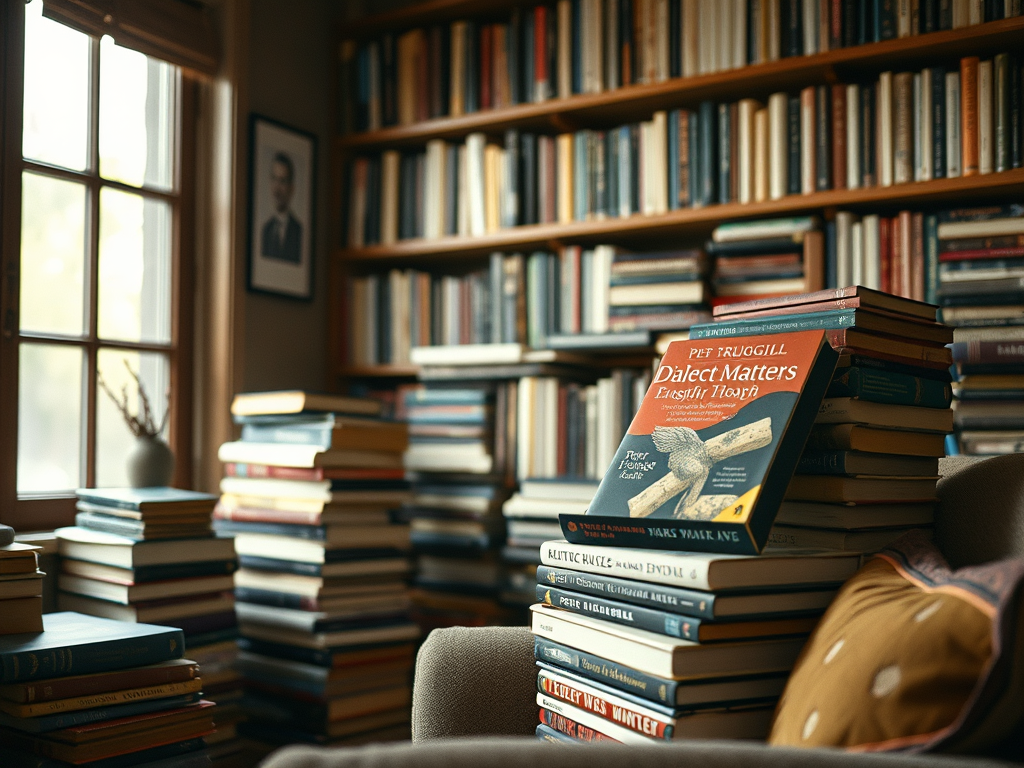
A while ago we added a copy of the excellent book, ‘Dialect Matters: respecting the vernacular language’ to our local history archive.1 It is by the Norfolk-born and internationally respected linguist, Peter Trudgill. Peter’s book consists of text from the regular column he wrote for the Eastern Daily Press. His column was on English language development and the importance of Norfolk dialect.

What follows are passages we have taken the liberty of adapting from Peter’s book. Our thanks go to the author for his kind permission for us to do so.
We have more in common than that which divides us
The languages of Europe all come from one language family called the Indo-European. This language existed 5000 years ago. Its descendants are now spoken from Iceland in the North to the Maldives in the South, and from Ireland in the West to Bengal in the East. Over time this language developed into what we would now call distinct ‘foreign languages’. But close inspection reveals real connections between them. For example, the Latin pater, Greek patér, and Sanskrit2 pitar all mean ‘father’. While Latin frater, Ancient Greek phrater, and Sanskrit bhratar all mean ‘brother’.
Literacy and pronunciation
Education did not become compulsory in England until 1880. When it was merely for 5–10 year-olds (Stoke Ferry’s, Bradfield School, was established in 1876). It was only by 1900 that there were enough people who could read to enable the mass production of books to be read for pleasure. And it was well into the 20th century before nearly all adults in the country could read. This widespread growth in literacy then began to influence the English language itself. It was not a very major effect. However, from the 1920s onward, it did start to have an influence on the way people pronounced certain words. There began to be a rise in what linguists call “spelling pronunciations”. The hostile attitude in this country to local ways of speaking made people feel uneasy about their own natural speech. If they did not feel entirely sure about how they “ought” to pronounce a particular word, they might change their natural pronunciation to one which seemed more like the spelling. They did this just to be on the safe side.
This did not happen with very common words. No one started pronouncing the g in night. Other words were changed, first by people who are linguistically insecure, and then by everyone else. In 1920, nobody pronounced handkerchief like we do today; everybody used to say “handkercha”. No one used to pronounce waistcoat as “waist-coat”; the normal pronunciation was “weskit”. And forehead was not pronounced “fore-head” but “forrid”. Here in East Anglia, we are not immune to spelling pronunciations either. Lots of people now say Low-ess-toft” when the real pronunciation is “Lowst’ff”. And many now say “Norritch” for Norwich instead of “Norridge”?
How the Ouse might flow with Whisky
There might be one or two readers who would not object at all if the Great Ouse, or the Little Ouse, flowed with whisky. Yet, they might not know that there is an interesting connection between the names of those rivers and the name of the drink. The English word whisky is an abbreviated version of an older form; whiskybae, which itself was an anglicised form of the Gaelic term uisge-beatha. Uisge-beatha means ‘water of life’, which would originally have been a translation of Latin acqua vitae, like the French eau de vie.
The second part of uisge-beatha comes from Old Irish bethu ‘life’. This is related to the Greek root bio-. We have borrowed this root into English in words like biology and biography.
The first part comes from Old Irish uisce, meaning ‘water’, which is from the ancient Celtic root utso, later usso. This is also where Ouse comes from — there are several rivers with this name in Britain.
In fact, many river names in England are, like the Ouse, pre-English in origin. They derive from the Celtic language of the peoples who inhabited Britain before the arrival of our Germanic ancestors.
So, River Ouse means ‘river water’. One possible scenario is that newly arrived Angles heard native Celts referring to the water in the Ouse as usso. The Angles wrongly thought that was the name of the river. Usso later became Uss, and then Uus or Ouse.
So, even if the Ouse isn’t whisky, Ouse and the whis part of whisky were originally the same word.
Swaffham: our local German Market Town
In post-Celtic times East Anglia developed something of an ethnic mix. There were, of course Angles and Saxons here, but we also had Frisians, from their homeland along the Dutch/Belgian coast. We can see this from the Suffolk village names Friston and Freston, ‘the village of the Frisians’. There were also other Germanic tribes hanging around. Swabia today is the part of Germany around Stuttgart, but the Swabian tribe spread far and wide in those days. The name of Swaffham meant ‘the home of the Swabians’.
But East Anglia also had plenty of survivors from the original Celtic population. On the Norfolk coast, just across the sea from the Frisian homeland, is the village of Walcott; ‘the cottage of the Welsh’.
So, Celts, Angles, Saxons, Frisians, Flemings, Swabians — there was a rich mix of peoples in early East Anglia. With such a diverse gene pool in our ancestry — not forgetting the Danes who came along later — it is no surprise that the native people of modern Norfolk and Suffolk are such a fine bunch.
Back-formation: Thetford and the Germans
But never mind Swaffham, have you ever wondered what the connection is between Thetford and the Germans? You probably haven’t. But there is one.
It is obvious that Thetford is called Thetford because there was a ford there across the River Thet. It is obvious, but it is totally wrong: the naming was the other way round. The River Thet is called the River Thet because there was a ford across it which was in Thetford.
This way of forming river names is called “back-formation”. The name of the River Glaven, in the North of our county, has the same sort of origin. The Glaven is called after the village of Glandford through which it flows, not vice versa. Experts think that the original form of Glandford was probably Gleam-ford. Gleam was an Old English word for ‘merriment’. So, it was a ‘ford where sports were held’.
Somewhat closer to home, we have the River Nar. The small village of Narford is not named after the river, the river is named after Narford. The nar part of the name meant ‘narrow’, so it was a ford in a pass or a narrow place.
But then the question arises: where does the thet bit of Thetford come from? The answer is that the original Anglo-Saxon name for the settlement was Theodford.
Theod was an Old English word which meant ‘people’, so Theodford was ‘the people’s ford’. Theod went back to an ancient Proto-Germanic word thiud, which also had a related form thiudiskaz meaning ‘of the people’. That word came down into Old English as theodisc, which no longer exists in the modern language. The corresponding word in Old High German took the form of diutisc. This has made it into modern German as Deutsch. This word now refers, not just to people generally, but to the German people and their language. In English we use the same word. However, it takes the form of ‘Dutch’ and refers to the language of Holland and northern Belgium. It also refers to the people of the Netherlands.
So, the thet in Thetford, the dut in Dutch and the deut in Deutsch were all originally the same word. Strange but true. And that’s the connection between Thetford and the Germans.
Footnotes
- We highly recommend this fascinating, accessible, and often humorous book. It is perfect for anyone who is interested in Norfolk dialect, dialects in general, or Norwich City FC! Available through the county library service, or you can buy on-line at Cambridge University Press, ISBN 9781316418109 ↩︎
- Sanskrit is one of the 22 official languages of India, the classical language of South Asia. it is the sacred and liturgical language of Hinduism, Buddhism, and Jainism. ↩︎
Leave a Reply